The fifth element
Works from the Kemp Collection
26 November 2025 – 22 March 2026

Date
26 November 2025 – 22 March 2026
Location
» KunstpalastAdmission: 16 € / concessions 12 €
Children / young people under 18: free
Members of Friends of the Kunstpalast: free
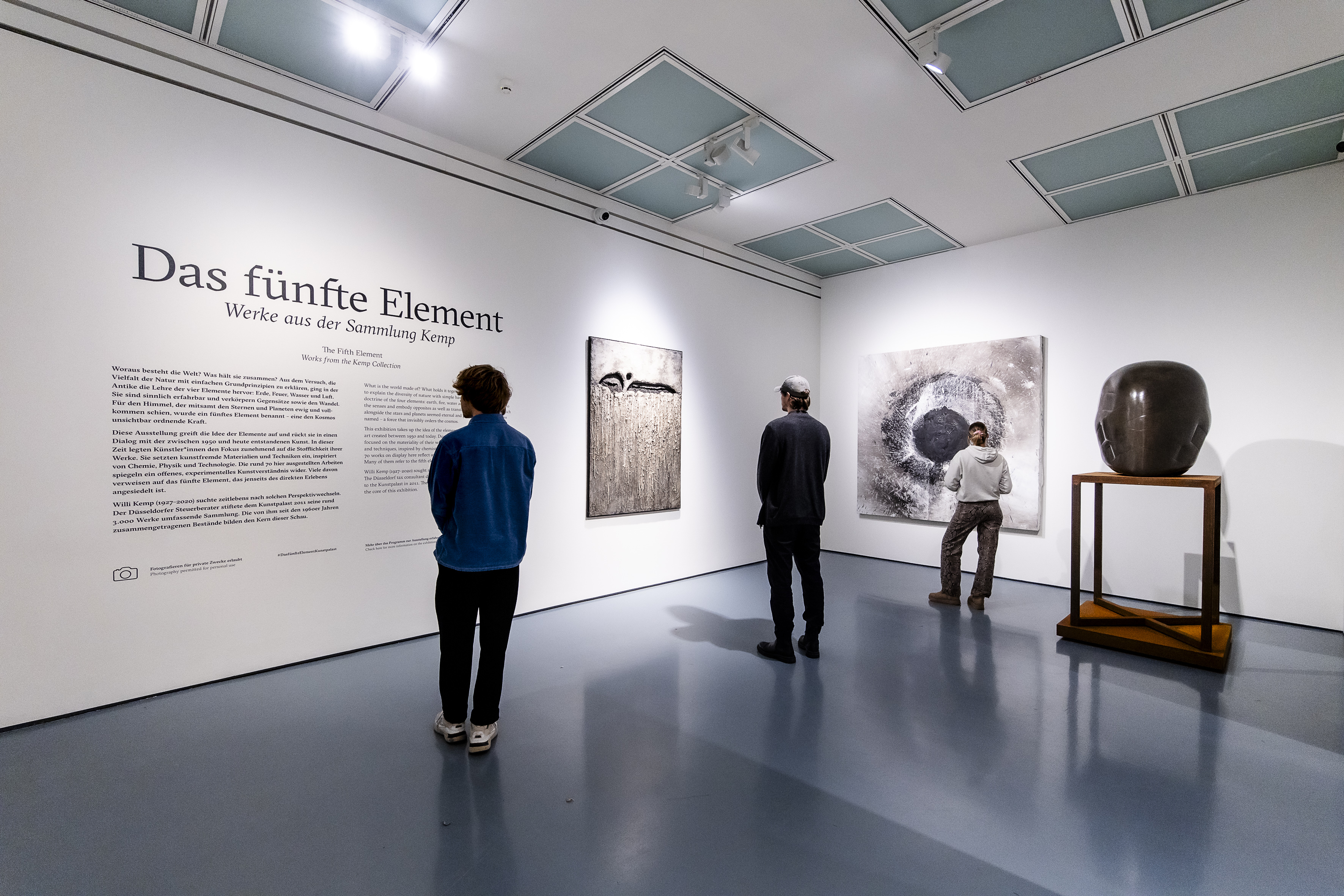
What is the world made of? What holds it together? These fundamental questions have accompanied humanity for thousands of years. In ancient times, people initially sought simple principles to explain the diversity of nature and developed the doctrine of the four elements: earth, fire, water and air. They represent opposites, change and sensory experience.
The exhibition brings together artistic positions that oscillate between physics and philosophy, material and idea, nature and technology. Kemp, a tax consultant and art collector from Düsseldorf whose collection comprises over 3,000 works and was donated to the Kunstpalast in 2011, spent his life searching for new perspectives. His fascination with abstract tendencies in art, with the interplay of materiality, energy and perception, shapes this presentation. The exhibited works invite viewers to reflect on the boundaries of matter, spirit and perception. Around 70 works show how artists explored the material, immaterial and processual in art in new ways.

Earth – Archive of Time
The presentation begins by focusing on the earth as a symbol of origin and transience. For thousands of years, it has stood for fertility, stability and the cycle of life. But the earth is not only a mythological symbol, it is also a real material. Artists of the 20th century began to incorporate the diversity of soil materials into their work as an independent means of design. In the work Garden by Düsseldorf artist Günther Uecker, made of sand and stones, a landscape association becomes apparent – oscillating between renewal and destruction. Reliefs, collages and earthy textures make the nature of the world visible and give it a new, artistic expression. In this way, the earth becomes an archive of time in which natural and cultural layers overlap – traces of life that are rearranged by the hand of art.

Fire – The Power of Transformation
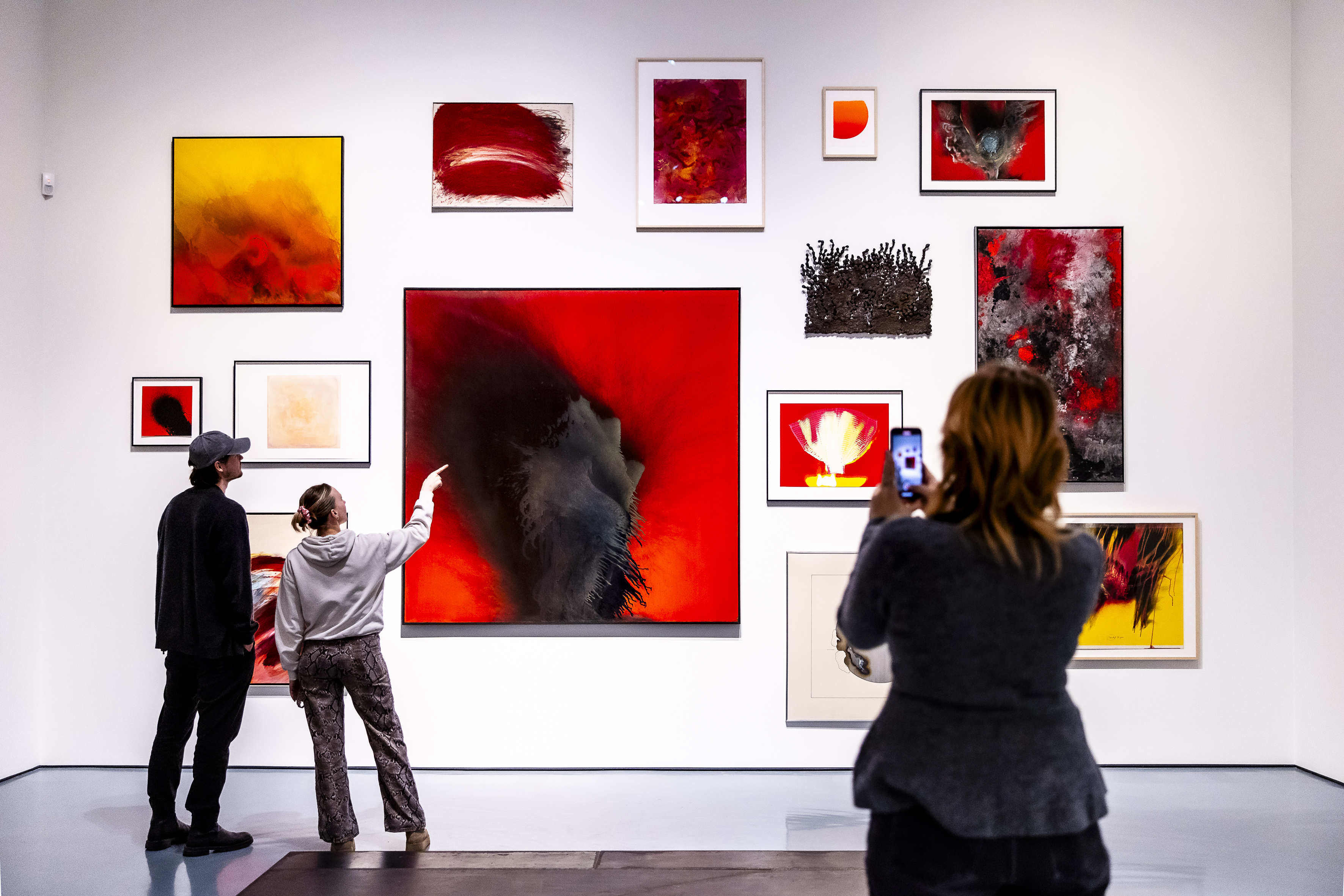
Hardly any other element embodies change as directly as fire. It destroys and creates at the same time. As a symbol of power, transformation and renewal, it runs through mythology, religion and art history. After the Second World War, fire became a driving force for transformation in art. Artists experimented with combustion processes, molten metals, sooty surfaces and intense colours. ZERO co-founder Otto Piene treated his canvases with fire, smoke and soot; he painted, sprayed and set them alight. Rupprecht Geiger used the luminous quality of colour to convey the energy of fire in his works. Whether in flaming colourful paintings or sculptures formed from glowing steel, fire became both a tool and a theme in the artistic search for a new beginning.

Air – Invisible Dynamics
Air is paradoxical: omnipresent yet invisible. It enables life on Earth and connects it to the infinite space of the sky. In art, it was initially depicted in the form of wind, fog or smoke, conveying depth and atmosphere. In the 20th century, air itself became the focus as a material: vibrations, pressure and movement became part of artistic experiments. Installations and kinetic objects make the invisible dynamics of the element tangible. Small Sail by New York-based German artist Hans Haacke is set in motion by a fan. Otto Piene’s fire gouache Red Icarus illustrates an energetic moment between departure and hubris. In these skyward-rising air sculptures, technology, nature and collective experience merge into an experience that draws attention to the relationship between humans and the environment. Air stands for freedom and transience, for the invisible that nevertheless has an effect.

Water – Form and Flow
Since ancient times, water has been regarded as the source of all life. It stands for change, movement and purity, for the constant transformation of matter and meaning. In modern and contemporary art, water also appears as a medium. Its flowing movement becomes a pictorial principle that emphasises blurring, transparency and change. From abstract paintings to objects, water serves as a symbol of the eternal cycle in which everything remains in flux. Gerhard Hoehme related these properties of water to those of paint: flow, impasto, layering and drying – to create an independent pictorial theme. Hans Haacke brings scientific processes to the fore and makes the water cycle visible in his work Tropfkugel (Drip Ball), which traces different states of aggregation. The element thus becomes a vehicle for social issues – between destruction and renewal, nature and culture.

The Fifth Element – World of Machines
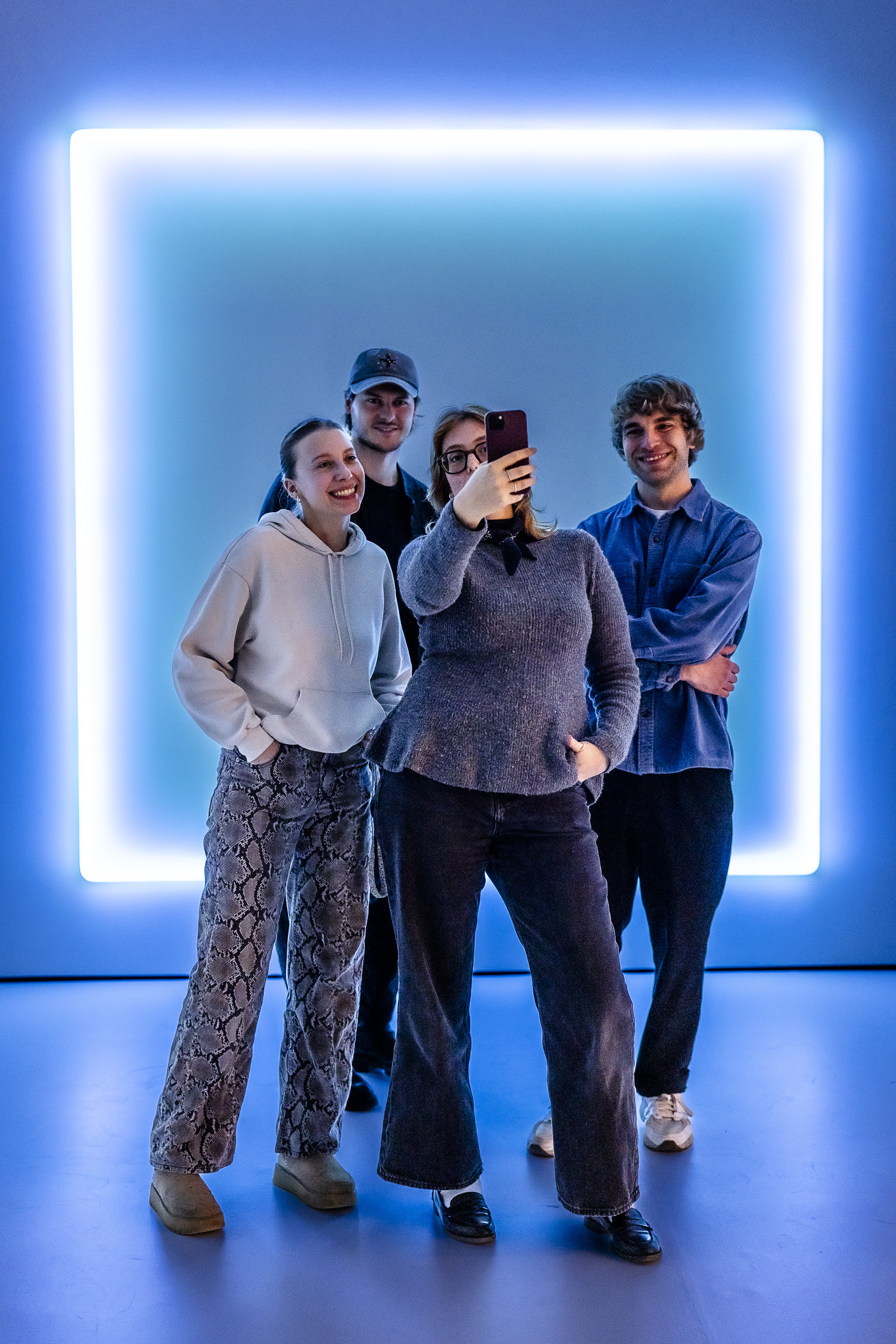
The four elements alone are not enough to explain the world. Aristotle added ether, the ‘fifth element,’ which fills and orders the cosmos. The last three rooms of the exhibition are devoted to this invisible principle, which symbolically transcends the material world and deals with concepts such as energy, time, space and consciousness. Since the 1950s, numerous artists have devoted themselves to these immaterial dimensions. Light, movement, reflection and vibration replace traditional form. Materials such as glass, mirrors, aluminium and electronic components open up new possibilities for expression. The result is works that oscillate between substance and idea – sensually experienceable, but at the same time intellectually charged.

A universal principle
The Fifth Element – Works from the Kemp Collection invites visitors to take a fresh look at the world of the elements through the lens of art. It shows that the boundaries between nature, technology and imagination are fluid. The works in the exhibition reveal the inexhaustible energy of creativity: a cycle of transformation, observation and insight – driven by the curiosity that fuels both science and art.
Curator: Therés Lubinetzki, research assistant, Kemp Collection, Kunstpalast

Power Lab
Research begins with curiosity and unfolds through posing questions. By conducting experiments, we explore the phenomena of our environment: What structures and connects the universe? Which forces attract and which repel? How do bright colours emerge from white light?
Become researchers and artists yourselves – let the exhibition inspire you! Earth, fire, water, air and the mysterious fifth element serve here as starting points for your own ideas. At the stations, take some time to observe, experiment and create something new.
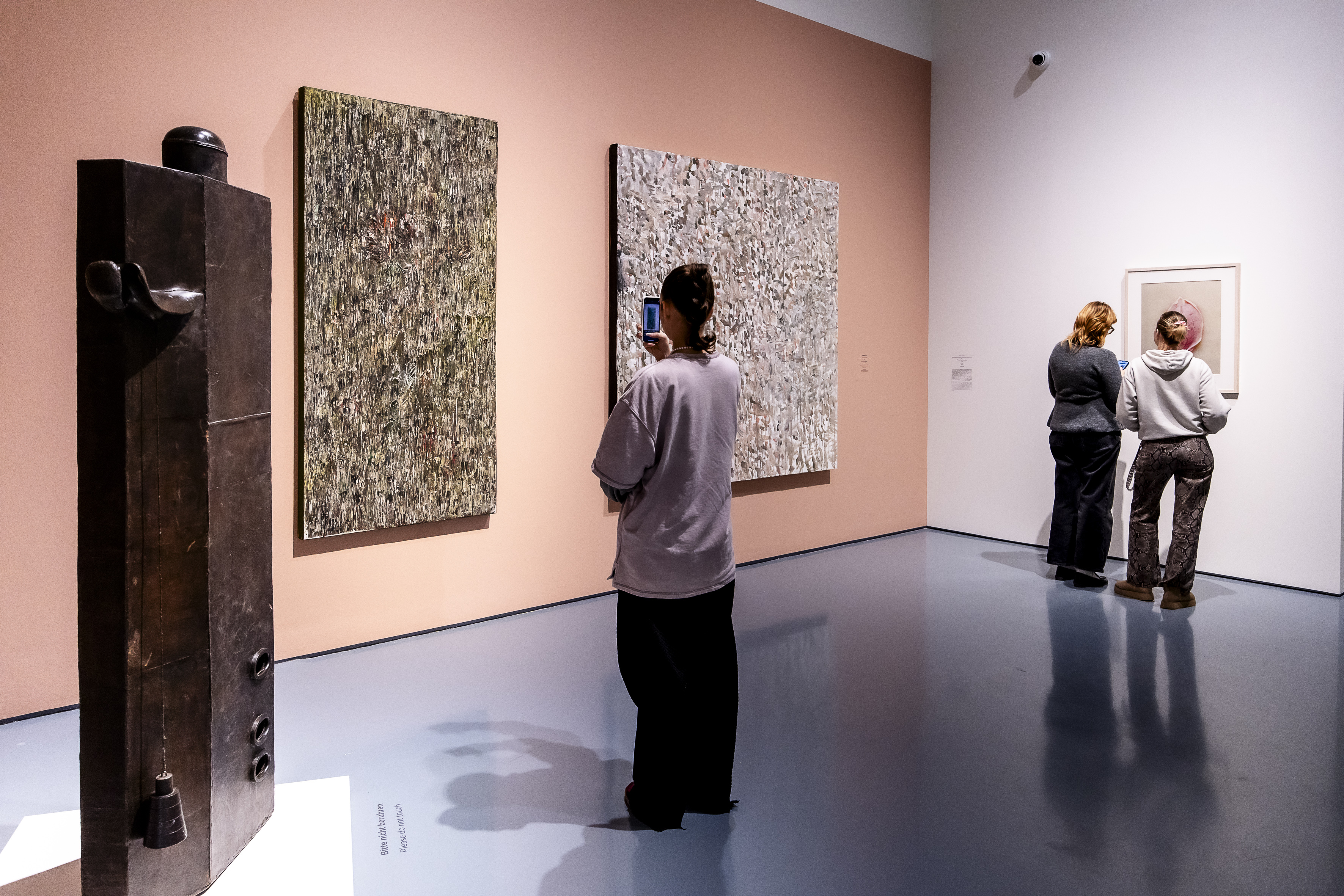
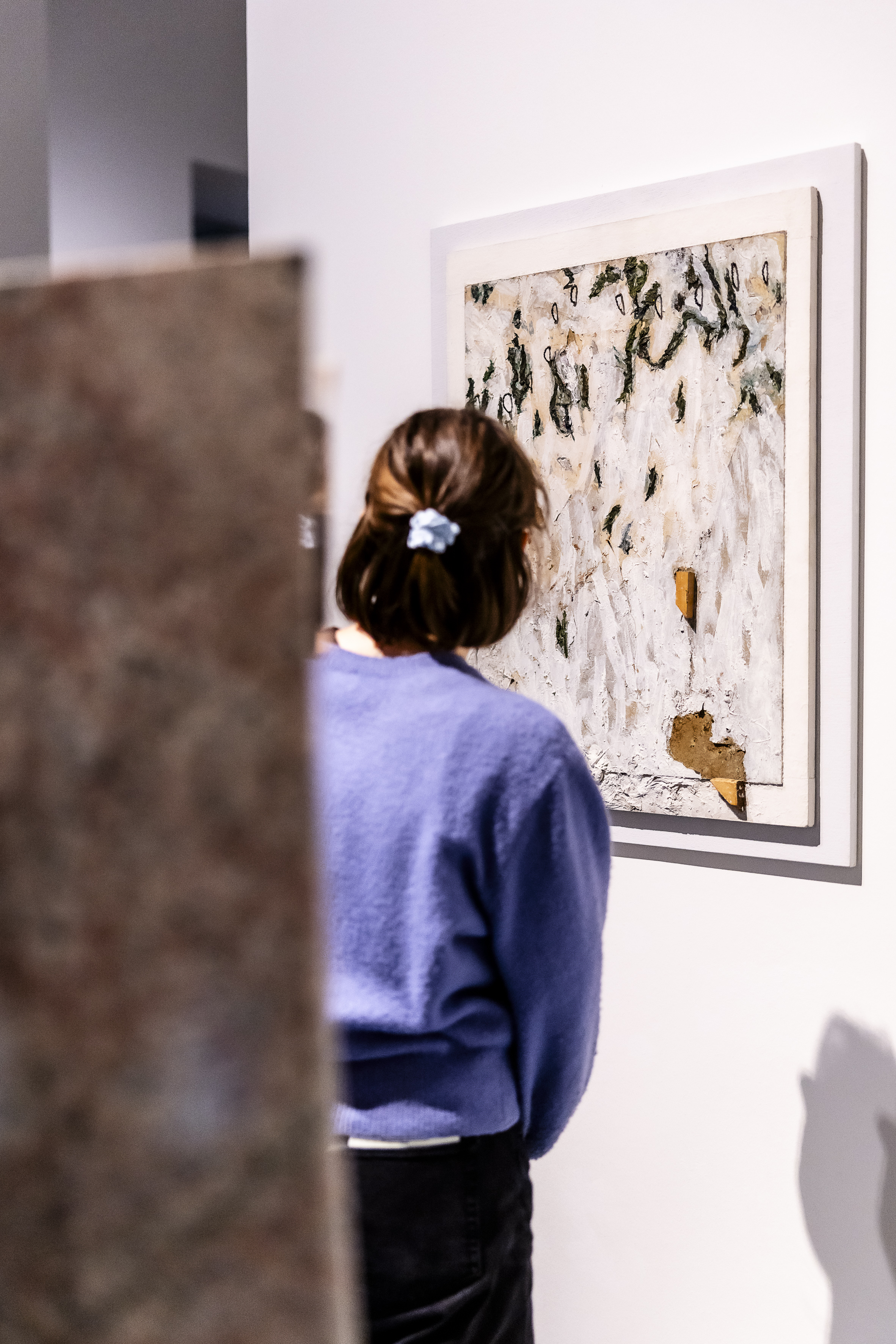
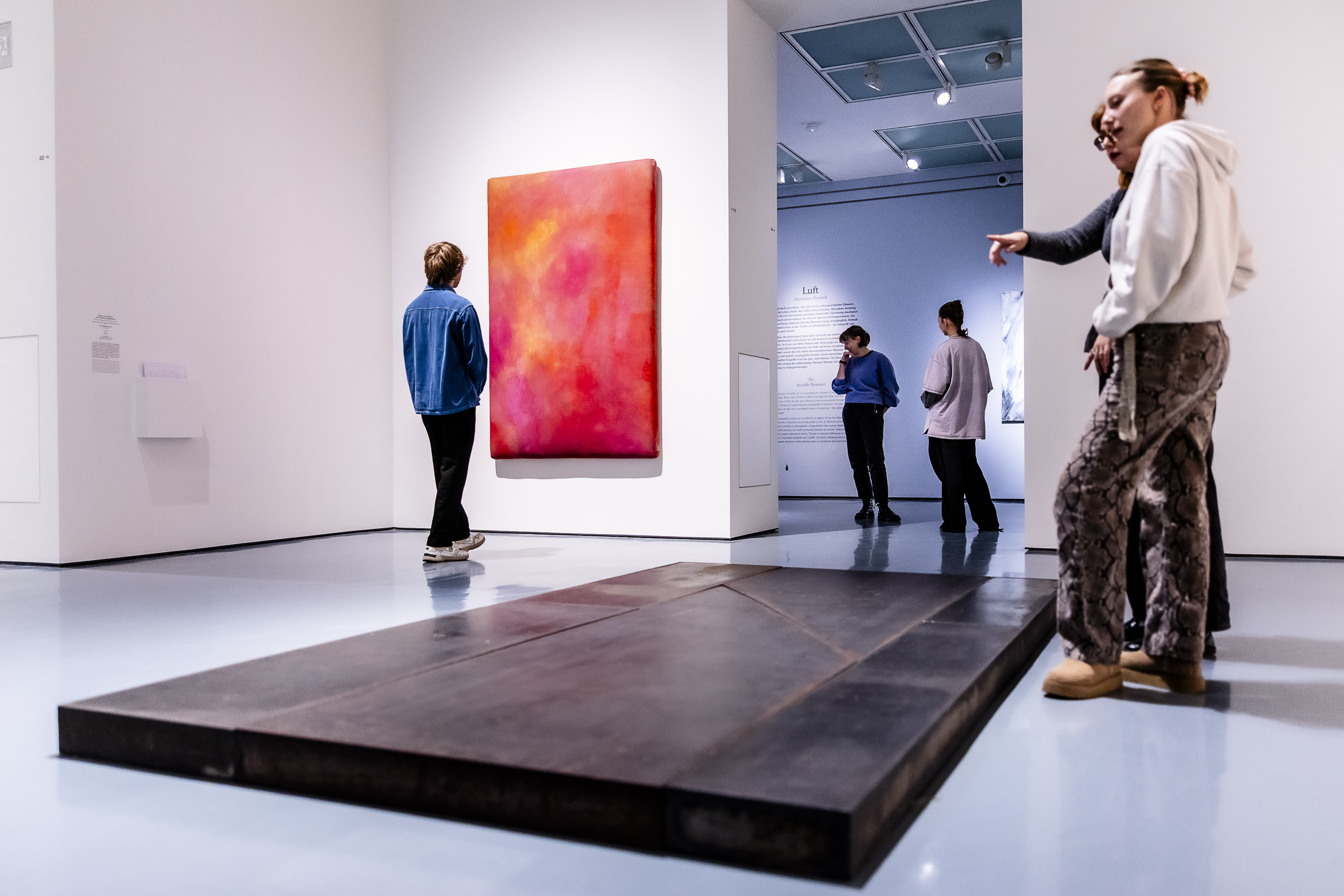
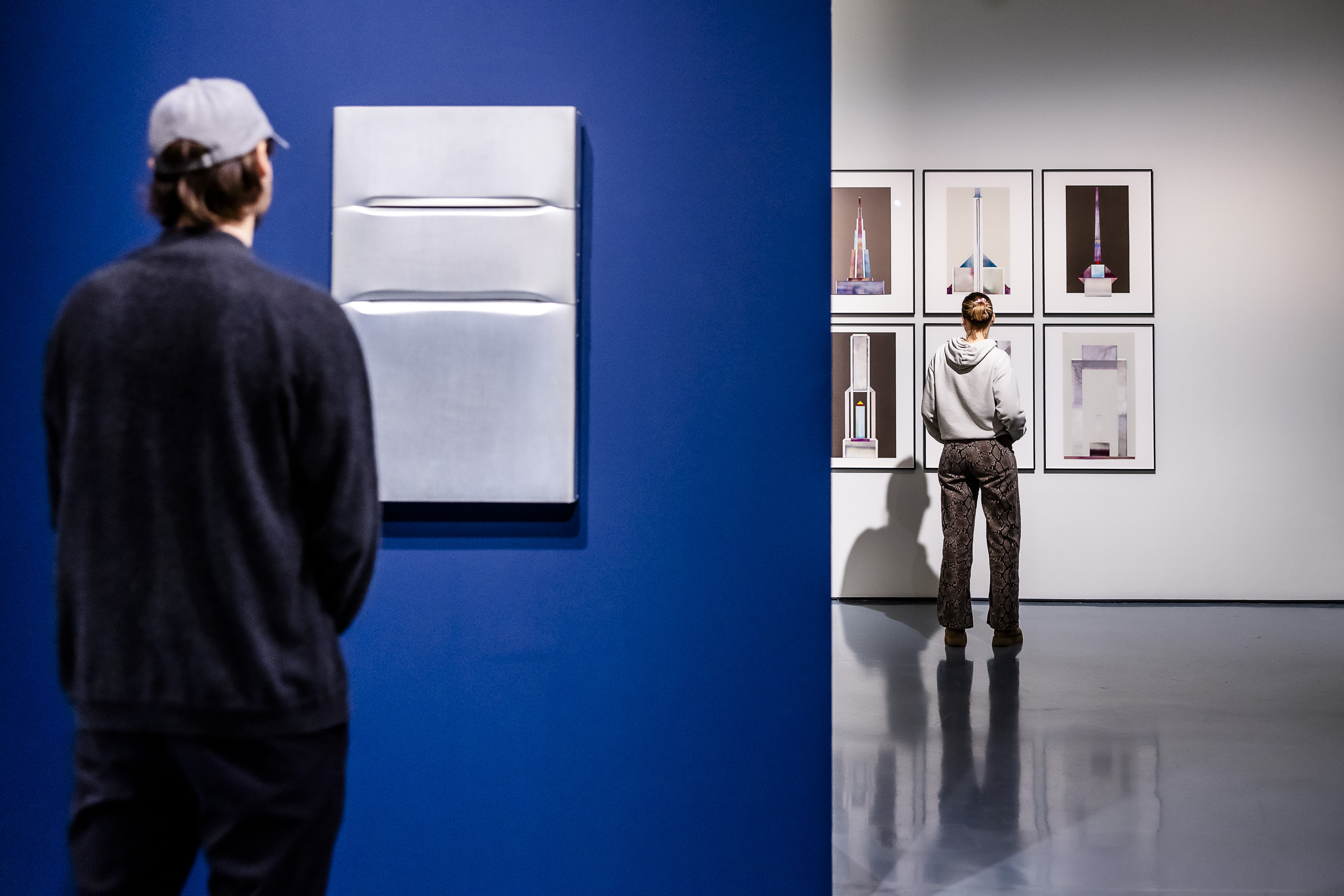
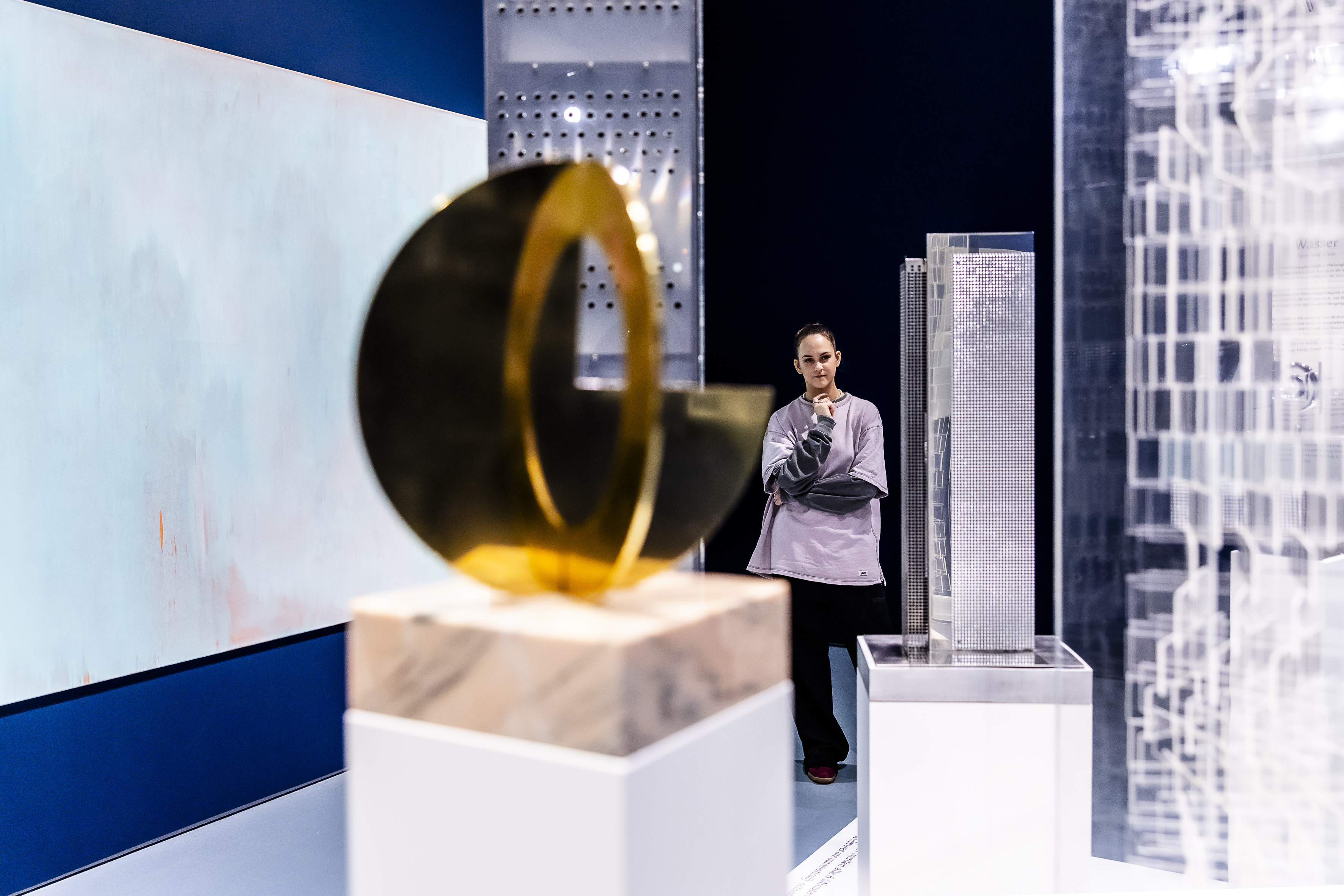
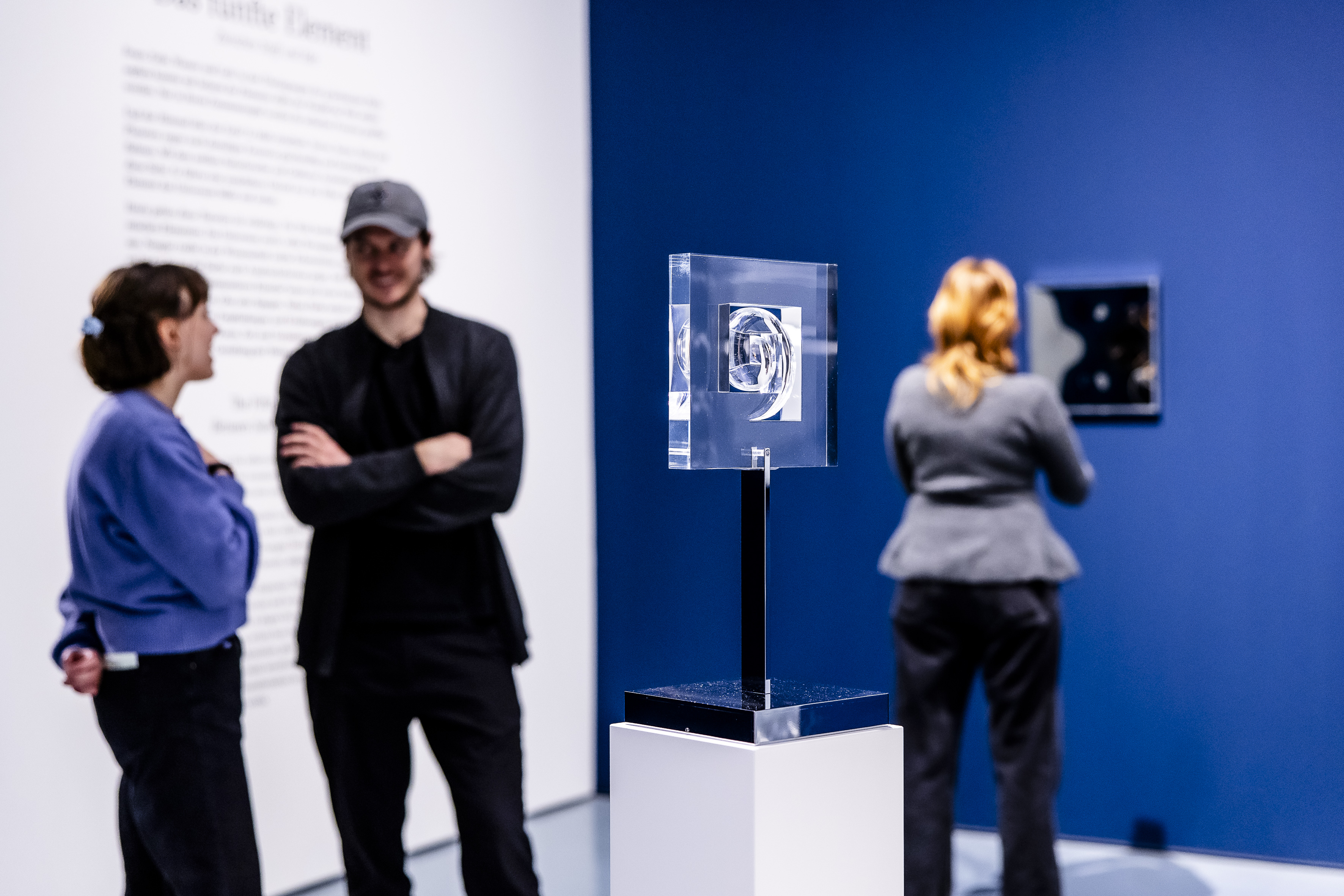
View of the exhibition
 View of the exhibition, photo: Anne Orthen
 View of the exhibition, photo: Anne Orthen
 View of the exhibition, photo: Anne Orthen
 View of the exhibition, photo: Anne Orthen
 View of the exhibition, photo: Anne Orthen
 View of the exhibition, photo: Anne Orthen
 View of the exhibition, photo: Anne Orthen
 View of the exhibition, photo: Anne Orthen
 View of the exhibition, photo: Anne Orthen

The Kemp collection
The Kemp Collection is one of Germany’s outstanding private collections of 20th and 21st century art. In addition to abstract painting, ZERO art, sculptures and works on paper, the collection built up by Willi Kemp and his wife Ingrid, who died prematurely, comprises a core of high-calibre works of Informel and colour field painting. In 2011, around 3,000 objects were donated to the Kunstpalast, and Kemp established the Kemp Collection Foundation for the research and dissemination of the holdings. His donation represents a significant enrichment and is presented in regular exhibitions.Learn more
Exhibition catalogue
Edited by Therés Lubinetzki | 120 pages | 23.5 x 28.5 cm | German | Hardcover |

Picture Credits
Picture Credits